Tuesday, February 22, 2022

Stuck in the Middle with You

Occasionally a reader will suggest I am overly critical of Republicans. It’s a reasonable criticism but lacks depth. Historically, political parties were monolithic groups comprised of approximately half the voters. However, as the parties moved further towards the extremes of the political spectrum, the differences in political ideologies have become increasingly noticeable. For example, the 2020 Presidential election fractured voters into blocs; 

  • Those who voted for Biden, 
  • Those who voted against Biden, 
  • Those who voted for Trump, 
  • Those who voted against Trump, and 
  • A smattering of ‘others.’

It's my party and I'll cry if I want to. You would cry too, if it happened to you (Lesley Gore)

In his book, Unstable Majorities, Morris Fiorina uses a data base that began polling voters in 1948 to demonstrate that voter’s views on policies have not changed an iota since the 1970s. Most People (see graph below), prefer a few policies from the left and a few from the right. The fact is most voters, especially those in Nebraska’s 2d Congressional District, have moderate policy views. 

What you see depends upon where you stand. 


For the Average Person (see above), 50% of political views are to her right and 50% are to her left. Since 1994, policy views, rhetoric, and actions of both political parties began moving towards the extremes, as labeled, Some People with Republicans to the right and Democrats to the left.

 Subsequently, as the party’s moved towards the extremes of the political bell curve, the majority are forced, by design, to choose ‘the lesser of two evils.’ 

Nobody knows where Donny has gone, But Joey left the same time

This movement allows the party to be distinctly different from their opposition. For example, at the extreme, as depicted by the blue star, 80% of voters are politically to the left. Based on Fiorina’s study, American voters have not become more liberal (or conservative). In reality, the views of those depicted by the blue star became more extreme. This is true at both ends of the bell curve. 

American politics is shifting from a Right versus Left debate to the Middle versus Extremes. Readers of my columns will notice I’m critical of extremism since, as Fiorina proved, their loudly voiced views , reverberating and echoed by hyper-partisan media, are not the views of Most People.

Play all my records, keep dancing all night. But leave me alone for awhile

Split ticket results of 2008 [Obama (D) & Terry (R)] and 2020 elections demonstrate [Biden (D) & Bacon (R)], Nebraska’s 2d Congressional District voters are among the most moderate in the nation. This is the view I try to represent. 

Furthermore, most Opinion Columnists discuss policies. Instead, I focus on character. Policies ebb and flow as social norms evolve, but national mythology focuses on character. For example; 


                                        Washington’s, “I cannot tell a lie” (he didn’t), 

                                         Truman’s ‘The buck stops here’ (it did), 
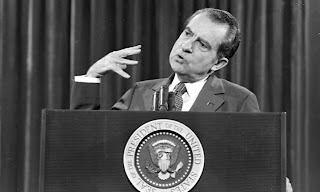
                                         Nixon’s “I am not a crook” (he was), and,  

                              Republican RNC's, "legitimate political discourse”(it wasn’t). 

Another criticism is citing obscure authors. I give credit where credit is due. Anything less would infer these ideas are mine and thus be dishonest. Naming authors allows fact checkers to do their own homework. Finally, obscurity is relative. If one reads my body of work, their vocabulary of ideas expands and the unknown becomes familiar. 

In grad school I argued knowledge without application is trivia. I still believe this. I understand that citing authors causes some readers to sense they’re being snowballed by some ‘smarty pants.’ I’d rather be an honest engine of change by sharing good ideas from the ivory towers into our lives. After all, teaching is what I do.

But it's my party and I'll cry if I want to. You would cry too, if it happened to you


Sunday, February 13, 2022


Charles Van Doren is best known as the contestant in the 1959 rigged game show, “Twenty-One.” In his book, “A History of Knowledge,” he explores the roots of Western Civilization. Like the Iraq war, Van Doren argues the world wars were actually one war with a brief interlude. While the assassination of Archduke Ferdinand sparked WWI, the author suggests we really don’t understand the underlying causes.

As depicted in the popular BBC series “Downton Abbey,” Europeans got swept up in the euphoria of nationalism, patriotism and visions of heroism fighting for national honor. But as mustard gas drifted across no man’s land, those in the trenches realized, as General Patton suggested 25 years later, it’s best to let the other fellow die for his country.

Today, we see similar passions driving public behavior.

“Love is but a song we sing. Fear’s the way we die” — The Youngbloods

For the most part, participants in the Jan. 6 Capitol siege were unaffiliated members of the general public. While the Republican National Committee describes the event that resulted in five deaths, more than 750 arrests, $30 million in damages to the structure that embodies our national ideals and the erection of gallows on Capitol grounds, as a “legitimate political discourse,” one wonders how things got so broken.

Time and again, those arrested, ordinary folks, testify remorsefully they cannot believe their own actions. Their testimony reminded me of the commercial, “I can’t believe I ate the whole thing.”

“You ate it, Ralph.”


“You can make the mountains ring. Or make the angels cry.”

After the Holocaust, we needed to understand why 90 million Germans turned a blind eye toward the industrialization of mass murder. Stanley Milgram’s controversial Obedience Experiment (1961) found that 65% of us would obey a perceived authority figure to the point of committing murder. Phillip Zimbardo’s Stanford Prison Experiment (1971) affirmed the behaviors of Milgram’s subjects. Hannah Arendt coined this “the banality of evil.”

“Though the bird is on the wing, and you may not know why.”

Oxford University scholars find a primary cause of widespread violence is when society breaks into factions. After fractionalization, grievance or a sense of victimization causes individuals to congregate and dehumanize the target of their grievances. In 2007, Jeffrey Kluger noted, “In most cases … you have a moral entrepreneur who exploits tribalism for evil purposes.” You see, when we join the crowd, history documents that normal people; churchgoers, social justice warriors, teachers, police officers, students and stay-at-home moms, are capable of acts they would never consider individually. When we get swept up in the moment, one can be easily led astray.

A COVID States Project survey this year found that 1 in 4 Americans believes that violence against our government is “definitely or probably justifiable.” Similar findings appear in other polls.

We know that violent crime against Asian-Americans went up as authority figures used the term “Chinese Flu.” Whether it’s an African-American church in Charleston, South Carolina (nine died), a synagogue in Pittsburgh (11 died, six injured), or a country music concert in Las Vegas (58 died, 800 injured), dehumanizing others, especially within defined groups, unintentionally can give others permission to commit heinous acts of violence.

“We are but a moment’s sunlight. Fading in the grass”

I doubt anyone envisions themselves in events that lead to violence. Certainly a large number of those arrested for the Jan. 6 insurrection could not. And yet the violence continues to occur.

Suppose for a moment that you’re among Milgram’s 35% who can resist authority. Then according to the most recent U.S. Census, that leaves 216.5 million Americans who cannot. Hyperbolic? Hopefully. But words and deeds matter.

It’s time to weigh our own behavior while not turning a blind eye toward irresponsible actors. Those using inflammatory rhetoric must be challenged or shunned in the pursuit of domestic tranquility over political tribalism.

“Come on, people now, smile on your brother. Everybody get together, try to love one another right now.”

Rick Galusha, Ph.D., teaches political science at Bellevue University. He’s hosted a blues radio show for 30 years and was president of Homer’s Music. Galusha was active in the creation of the Old Market Business Association. His opinions do not represent those of Bellevue University.

Wednesday, February 2, 2022


Random Thoughts of a Cantankerous Curmudgeon

  After reading Rick Galusha’s thoughts posted on Barking Rino in December of 2021, some similar thoughts came to mind. I have long held to the Santa Claus image of American society and culture. Sounds strange for a nice Jewish boy from New York City, yes? What I had in mind is this. 

  The difference between myth and reality is not always clear. At times, even myth obtains some verity. If enough people for enough time accept the myth, it obtains the influence of fact.

  Christmas. Remember when you were a small child, maybe 6 years old. It was magical, not because of the gifts you in fact got, but because of Santa Claus. You knew that the old gent was speeding around the globe, scooting down chimneys, and leaving the heart’s desires of kids like you all over the world. You even left milk and cookies for him to snack on. What a wonderous time and idea. Your attitude infected your parents with joy as well. But, and a great big but, when you turned 8 or 9, you learned that Santa was, in fact, a visa card in your parents’ pocket. You were a little disappointed, but at the same time, it felt good to be in on the game. Now you were a grown-up and not so easily led astray by appealing stories. It was still nice to get all that stuff, but Christmas was no longer magical. By the time you were middle-aged or older, you discovered that you wanted Santa Claus back. You wanted to share in the excitement of your young children or grandchildren. However, hard as you tried, you could not get him back. Santa had turned into a fat old man ringing a bell at a Salvation Army kettle.

  I was born in 1942. While I was growing up, there were lots of bad things happening in the world – World War II, the Holocaust, bloody revolutions, segregation, and racial prejudice, sexism, etc. 

  However, I lived in a world that made sense and was essentially good. I had no doubt that the United States was not only the most powerful nation, it was also the most altruistic and noble. Our policies and beliefs were admired by all. We wanted nothing for ourselves except that essential feature of the Miss America Pageant, world peace. Our motives were never selfish. Our leaders were honest, intelligent, well-intended men and a few women. Businesses always gave value for the money spent. The information in the newspapers was always reliable because, of course, they would not print things that were not true. Walter Cronkite was the most trusted man in America. The cop on the beat was your friend and ever-present to help if you were in trouble. Things were great, that is if you were a straight, white male.

  Then, for me, 1963 happened. I was a semi-warm supporter. I did not think he did a great job as President. When he was murdered, the tears I wept were as much for me as for him. He was our guy, young, hip, and far-sighted. What happened then? The Civil Rights Revolution, of which I played a very small part, got most of the legislative and judicial victories. But it turned violent, and more importantly, things did not change for African Americans. Pulling together was replaced by Burn, Baby, Burn. 

  Student idealism and activism became the Weathermen. The war in Viet Nam became part of our daily television programming with no end in sight. I have five friends on the Wall in D.C. After the Dominican Republic in 1965, we learned that our leaders had lied to us, and continued to do so as revealed in the Pentagon Papers. We were introduced to the real White House in Watergate. How much could we process, much less stomach? What had happened to real Americans like John Wayne? Yet, there was some satisfaction in being in on the game. We were all grown-ups now. You could no longer pull the wool over our eyes. We acquired a healthy skepticism from living in the world as it really was. Life is tough but so are we.

  Do not misunderstand me. So much is better today than it was as I grew up. We are much further along in redefining Jefferson’s “all men are created equal”. But I fear that many of us have turned into cynics rather than skeptics. We are no longer the unified, wide-eyed patriots that we imagined ourselves as being. We would rather shred our political opponents than figure out ways to cooperate and get things done. Now, with fewer days left of looking down at the grass, I yearn for the days when I was a true believer.

  What does all this mean? For me, it comes to this. If we are the creation of some intelligent being, he, she, or it goofed. As a species, we are not that great. Maybe that is why we celebrate the Arts, kindness, and heroism. Given the raw material we are, what a triumph. Perhaps we need myths to survive and live authentic lives. As Joseph Wood Krutch remarked in his “The Modern Temper” in 1928, “we would rather die on our feet as men(women), than live on our knees as animals”. 

SELAH


Dr. John Spivack

Professor Emeritus of History

Tuesday, January 11, 2022

Meeting Pete Townshend


There is perhaps no image that screams ‘rock and roll!’ louder than the photo of The Who’s Pete Townshend using two hands to hold his guitar above his head, knees tucked in, leaping into the air at Isle of Wight Festival.  It was as though he was making a sacrifice to the sun, the crowd, and a gods of rock n’ roll. As Mike Cody (Hotavy, KQ 98) described it, “This is a man enjoying his rock n roll.” The festival would be among the last shows Jimi Hendrix played before his untimely death in a London hotel room just off St. James' Park. 

Inevitably the call was going to come. Some friend would want to know if I could help him meet a musician. Usually this included the “backstage experience.”  Now, admittedly, I enjoyed meeting and talking to famous people too. Asking wasn’t the negative thing for me, making the magic happen was the challenge. If you’ve never had a backstage experience, expect the unexpected. I’ve been graced with backstage passes to Springsteen’s shows a couple of times, the Tunnel of Love tour in Minneapolis, and a Meet n Greet in Kansas City. While I’ve met all the E Street Band members a couple of times, Bruce never showed for either event. In Minneapolis we sat with the label rep in a “green room,” and sat, and sat. Eventually someone stuck their head in the room and said, “Bruce left over an hour ago.” Bummer. To be fair, artists have to be “on” at these events, nice to everyone, sign a gazillion things, and pose for pictures. If you’ve just put on a three-hour show, I’ll bet the last thing you want to do is have to put on a brave face and get pawed by people trying to connect with you and share how important you’ve been in their lives. I get it. But I still like meeting famous people.

This call came from a friend I’d know for years. An aspect of knowing  ‘Fred’ is knowing Fred loves, I mean loves, The Who. Whenever I hear about a tour, see something special, or get a promotional piece, I give it to Fred. I know he’ll give it a good home. Fred is the son of wealthy people. But he’s a genuinely nice guy and, like a few people I know who come from money, you’d never know it, well, unless you knew it.

“Can you get us backstage at The Who?” he asked. 

“Fred, I’ve been out of music retailing for a long time now. I don’t know.” 

“Would you try?” 

“Of course” I said.

Now what? The band was not putting out albums, so there were no label contacts. The radio station where I’ve been doing my show (for 30 years now) doesn’t play The Who, so that’s a no-go too. I knew a guy that does an annual benefit show with Springsteen. I know that Michael J Fox is friends with Townshend through some charity or another. I thought I could ask Bob to ask Michael…no, that’s a dumb idea. The first rule of knowing famous or wealthy people is, never, under no circumstance, ever, ask for a favor. Everyone they know and meet just needs a favor. Ugh. What to do?

I recalled that reading the Townshend has set up a charity. If Fred was willing to use his trust funds to make a donation to Townshend’s charity, perhaps… It was my only lead. Turns out Fred was willing to make a very sizable donation. Okay, that number would raise some eyebrows.  I got online to find the name of the charity that might be able to connect me. This meant calling England. It was a clunky conversation.

“...and so, if Pete would be willing to meet my friend when the band plays in Omaha, my friend would make a donation to Mr. Townshend’s charity.” 

“That’s a sizable donation.” 

“Well, if you could ask, I would appreciate it.” 

When I got up the next morning, there was an email in my AOL account. “Mr. Townshend would love to meet some people from Omaha but please, no donation is necessary. Please bring your friend, and your wives….(here are the details to connect.) ” Whoa.  

Fate had smiled broadly. 

I called Fred with the good news.

When the day arrived, the four of us met and prepared our momentous moment. I had a program from The Who’s 1976 show in Glasgow where, as a 16-year-old living in England, had taken the train by myself, found a BnB, and attended the concert on the (sacred) Celtic football grounds. The line-up was exceptional. Local heroes, The Sensational Alex Harvey Band, preceded The Who. Others on the bill included Widowmaker (feat Mott the Hoople’s Ariel Bender), Little Feat (with Lowell George), and The Outlaws. I’d seen Little Feat and The Outlaws in Newcastle City Hall two days earlier. I also had a ‘Maximum Rock n Roll’ poster for my friend Rich.


I thought about the many times I’d see The Who. Keith Moon was still alive the first time I saw them. Glasgow is like Detroit except meaner. The crowd was wildly intoxicated and really difficult to understand. While some suggest Geordies, folks from Newcastle Upon Tyne, are hard to understand, Wegies or Glaswegians are damn near impossible to understand without some sort of translator in your ear. 

Famously, during the song Won’t Get Fooled Again, green lasers were short over the crowds head during a lull in the song. Smoke danced across the sharp green planes of lasers that slowly pointed down towards the crowd. Although sober, I was only 16 and alone is a foreign country, the lasers wiped out any sense of horizon and things became akimbo and tilted. At a precise moment in the song, Townshend lept across the stage, and in his famous wind-mill motion stuck a power chord that launched the band back into the song. “I move myself and my family inside…” 

Magic.

When we got to the Omaha Shed, the cell reception was sketchy. Damn, we couldn’t reach our contact. I paced around wondering what to do. Here we stood, waiting for our moment, knowing our contact was waiting for our call, but the phones weren’t working. It was cold out but I walked down the street and made my call. “Yes, we’re here.” “Great, I’ll meet you and give you the passes, You’d better hurry.” Racing back I grabbed our foursome and took off for the rendezvous point.  Eventually we got ushered back. A quick handshake with Pino Palladino (bass) and Zak Starkey (drummer & Ringo’s son, who also played with Oasis). Pete was cordial, asked a few questions, and posed for some photos. “Now, what’s your name again?” “This one’s for Rich.” When Fred set his materials down, Pete focused on Fred and his wife.

I spied Roger Daltrey about 15 yards away; completely unplussed. I walked over, Even in his mid60s, Roger Daltrey was cut. When I meet people I’ve admired, I try to think about the meaningful moments in their career. With Daltrey it was seeing live, swinging a microphone in 20’ circles, grabbing it at the last moment and pulling it in to scream “Yeaaaaaaaaaaaaaaahhhhhhhhhhh” at the crescendo in Baba O’Reilly. What a stud. I’ve probably seen The Who 20x, such a great band. The magic always shows up.

"I have to be careful not to preach
I can't pretend that I can't teach
And yet I've lived your future out
By pounding stages like a clown

And on the dance floor, broken glass
And bloody faces slowly pass
The numbered seats in empty rows
It all belongs to me you know, okay"

As I neared I could tell his nose had been broken. He’s shorter than me. “How’s it going?” Roger grunted out a reply and was clearly not interested in any false adulation. Having recently read his autobiography, Daltrey views his role in The Who as a singer. That’s his job. Pretty much like working in a factory but the pays a bit better. He’s just a working-class guy who’s hung onto his Cockney roots and has taken an unpretentious approach to a life that could easily have otherwise gotten out-of-control.

I mentioned that Omaha was a college football market and if he wanted to rev up the crowd he could use the phrase, “Restore the Order.” “I’m not saying that” he replied. “Um, Jagger did a couple of weeks ago.” “He did, eh?” said Roger, looking over the top of his glasses. He was a nice enough guy but I knew from being around for a while when a musician is getting ready to go onstage, they are mustering the focus and energy necessary to put on a great show. Roger was mustering and therefore I was pestering.

We made our way to seats. Fred had gotten us in the second row right in front of Townshend. The band came out. While the crowd cheered, Townshend walked over to Daltrey and pointed out some friends, whom they both waved to and smiled. I’d love to know who that was. It was after the third song, Daltrey, with a cup of tea in hand, for his obviously hoarse throat, stepped up, “We’re The Who and we’re here to restore the order!” The crowd cheered as the band took off into the rest of their set. 

Video: The Who, Omaha December 8, 2006

Mission accomplished.


Footnote: while reading Daltrey's recent autobiography, he mentions using a bulldozer to create a trout fishing oasis so he and his friends from the “old neighborhood” could get together. Today visitors can rent a cottage and fly fish for trout on Daltrey’s estate. https://www.lakedowntroutfishery.com/. If you decide to go, call me…


Thursday, December 30, 2021

What pride should dwell in this, our legacy?


                                                                (Note: Watch Paul and George move to look over John's shoulders)


At this time of upheaval and change, I’ve been thinking about events that shaped modern America. Psychologist Erik Erickson writes the 8th Life Cycle is to reflect on one’s legacy.

When I was younger, so much younger than today, I never needed anybody's help in any way (The Beatles, Help).

My awareness began with Kennedy’s assassination. Whether it’s remembered or conceived, my earliest memory is JFK’s funeral.

The bullet threads the 1960s including the deaths of Martin Luther King, Bobby Kennedy, Malcolm X, four Kent State students, and 58,220 causalities associated with the Vietnam Conflict.[1] Despite living in the shining city on the hill, violent death accompanied our youth.

As Vietnam ended, the corruption of Richard Nixon and Watergate watered the seeds of cynicism and mistrust toward government and each other. We stumbled from Ford to Carter amid malaise and gas lines towards a new day in America.

But now these days are gone I'm not so self-assured.

In 1980 Beatle John Lennon was murdered. We couldn’t imagine that the Dreamer had died. Our dreams of a better world withered.

Although Iran Contra exacerbated declining trust, the Berlin Wall came down, the Soviet Union collapsed, and democracy expanded in Eastern Europe. For a while, we “danced on the wall.”

The late 80s contrasted the collective hopes of Live Aid, Farm Aid, and starting families; against the devastation of crack cocaine, gangs, and AIDS.

Meanwhile, supermarket tabloids out- sold newspapers and created the conspiracy industry. Society was warped by celebrity and reality tv including a White Bronco, Kardashians, televised preachers, and Jonestown. We gasped as credible reports of pedophilia were lodged against Michael Jackson, myriads of Catholic Priests, Olympic and football physicians, and the Franklin Credit Union investigation.

Then came cable’s 24/7 news cycle and the pithlessness of ‘gotcha politics.’

I was at the Ranch Bowl when images from Paris depicted a mangled Mercedes and death of a Princess. For a while, hope turned to tragedy.  

On September 11th the nation was instantaneously transformed and once again we wept. The nation quivered between anger and fear as the War on Terror took American troops to Afghanistan, Iraq, and eventually Pakistan.

And now my life has changed in oh so many ways.

Somehow, it seemed, through the fault of no one in particular, we changed. The rapid pace of technology brought out the best and worst of us. Favor towards marriage equality moved quickly while pluralism turned some towards bitterness and resentment.

Help me if you can, I'm feeling down.

On January 6th, President Trump’s failed coup defined him, his followers, and national politics. The world looked on in horror as Americans held their breath. Sandwiched between ideological divides, everything became political. Otherwise mundane medical issues such as masks and vaccines were woven into shadowy caverns of conspiracies fed by manipulative news outlets, feckless blogs, and social media.

My independence seems to vanish in the haze.

All the while our kids grew up, little league games gave way to graduations and diapers. Full houses downsized to empty nests and the America Dream teetered on nightmares of division, unfettered anger, entitlement, and identity politics. And yet we prayed for our kids and pondered the society we’ll bequeath them.

What is our legacy?

Are we defined by fear and anxiety, a $28 trillion dollar monument to mismanagement, and manipulated societal division? TV depicts street altercations with spilled blood and tear gas while apologists line up to excuse insurrection and lies. Strangely, we fund charities and readily assist after natural disasters while too many refuse to act toward the common good.

Now I find I've changed my mind and opened up the doors.

When I look for leadership, I am drawn to Dr. Fauci who side-stepped politics to  navigated a pandemic, Congresswoman Liz Cheney for punching a bully in the nose, and Senator Amy Klobuchar for articulating Midwestern common sense while others spewed deceit or complied with silence.

Help me get my feet back on the ground.

What pride should dwell in this, our legacy?

I am inspired watching a palsied student willing his uncooperative body towards class, or watching the sunrise over Iowa’s bluffs bringing the unwritten day. Friends and colleagues offer kindness while my wife steadies our home. But my greatest hope comes from our children and students who remain nonplussed by American pluralism.

I know that I just need you like I've never done before. Won't you please, please help me?

Wednesday, December 29, 2021


OWH December 2021 B                                                                      Rick Galusha

Senator Fisher’s recent Op-Ed, opined that seating more than nine judges on the Supreme Court places the blame squarely on President Biden. I agree that stuffing the court is a bad idea. However, it did not happen in a vacuum. Both parties have ‘dirty hands’ in undermining our trust.

For generations, our system of self-governance relied on accepted traditions and the institutions they safe-guarded. The Senate was once the legislative chamber of decorum and well-mannered jousting of ideas. Between Watergate and the modern era, this faded into rank partisanship and succumbed to the strategy of “no.”

Gallup reports trust in institutions has been steadily falling. I recall the pre-political-team era of getting things done, policies addressing shared long-term interests, trusting elected officials to do the right thing over the politically advantageous thing, and, regardless of political affiliation, condemning bad behavior and lying.

In the Federalist Papers (1787) James Madison ponders that the legislative branch may be too powerful, thus overshadowing the executive branch. As the world became smaller and more complex in the late 20th Century, the Presidency became more powerful while the legislature faded. After the Constitutional debauchery of Watergate, the legislative branch made overtures to rebalancing power with the White House.

And the men who spurred us on, sit in judgment of all wrong. They decide and the shotgun sings the song.

However, instead of living within the constraints of rules and traditions, officials moved the goalposts by changing the rules and traditions to assure short-term victories over long-term good governance. Among these bad ideas include the reckless spending of MMT, voter ID, ending the Electoral College, and McConnell’s ideological imbalance on the Supreme Court.

In 2013 Harry Reid (D) lowered the vote threshold for Federal judges in the Senate from 60 to 51. The traditional threshold of 60 meant that judges would have to secure votes from the opposing party. Since Senate majorities rarely achieve 60 sitting Senators, it meant that judges tended towards moderation.

We'll be fighting in the streets, with our children at our feet. And the morals that they worship will be gone.

In order to balance power, governing pits interest against interest. While changing the rules helped Reid’s effort to place Obama’s judges, by lowering passage from 60 to 51, Reid’s short-term gain opened the door for the ideological imbalance we see on today’s Supreme Court.

Take a bow for the new revolution.

Predictably, Republicans flipped the rhetoric of convenience, not once but twice, by stalling Obama’s nominee, Merrick Garland, and then disingenuously placing three Trump nominees on the Court. No longer does the ideology of the Supreme Court’s justices exist within a narrow range of partisan views. And since judges sit for life, it is a long-term imbalance.

Students of the Constitution, Federalist Papers, or Aristotle know, a long-term imbalance is tyranny.

Smile and grin at the change all around, Then I'll get on my knees and pray…We don't get fooled again.

The moves by Reid and McConnell were good short-term politics but inflicted long-term damage. Eventually, the other party comes into power and, consequently, governance takes a seat on the teeter-totter of hyper-partisanship as “the new boss” undoes the policies of their opposition.

Secondly, the Court has always been modestly partisan. The tradition of compromising on placing judges prevented the Court from becoming politicized. As such, we trusted that over time the courts would balance and be neutral actors addressing complex issues with an even hand.

Meet the new boss: same as the old boss.

Time was when elected officials learned that doing the right thing mattered; LBJ changed his spots and signed the Civil Rights of 1964 and the Voter Rights Act of 1965, George Bush raised taxes, Truman integrated the troops, Reagan tippled with O’Neil, and Liz Cheney stood tall when the nation needed her courage.

In an era defined by mistrust and rewarding noncompromising, traditional governance is being replaced by self-serving ideologues that run roughshod over the rights and interests of you and me. Increasingly, the many are all held hostage by the few.

Not because their ideas are better but because they are willing to damage the nation and cripple democratic principles such as the smooth transition of power or free & fair elections.

No wonder Americans’ willingness to trust others and our institutions of self-governance continue to drop.


Sunday, December 12, 2021

Rick Galusha: Finding good people and avoiding extremism (OWH 12/12/2021)


Aesop tells the tale of a good-natured frog giving a scorpion a ride across a creek on the frog’s back. Despite assurances, true to his nature, the scorpion stings the frog midway, causing both to die. It’s an instructive fable, teaching we are each subject to our true nature.

I think of Nebraska voters as prairie populists. Generally, we like elected officials who go to Washington, keep a low profile, stay out of the news, defy hyperpartisanship and don’t make comments that feed into negative stereotypes.

“When there’s no one complaining there’ll be days like this.” — Van Morrison.

In a political landscape that rewards outlandish commentary and strict adherence to party litmus tests, stoicism goes unrewarded at election time.

For a very long time, Omaha’s metroplex has been blessed with emotionally stable, thoughtful, good candidates.

As a kid growing up, we all knew that the son of newscaster Lee Terry lived in the neighborhood. He was a goofy, but friendly enough, kid living in a long shadow. Soon enough, he was our congressman. Lee was middle-class, college-educated, spoke like the rest of us, loved Nebraska football, and had the audacity to wear a leather Disney jacket (long story). He was and is one of my oldest friends.

It was Lee who told me what a good person Kara Eastman is. As I got to know Kara a bit more, true to form, she was kind, thoughtful, engaging and sincere — a delightful person.

As the founding president of the Old Market Business Association, I got to know Unicameral Sen. Brad Ashford when he revived Nebraska Clothing Company in the Old Market. He was similarly thoughtful, informed, well-connected and has since been my friend.

I don’t know, I just like good people without worrying about their political affiliations. And, when you’re not watching cable news, you probably do too.

“When all the parts of the puzzle start to look like they fit, I must remember there’ll be days like this.”

Of 435 congressional districts, political scientist Morris Fiorina notes that fewer than 40 (8%) flip from one party to the other. Arguably, Nebraska’s 2nd District is the most moderate and flippable congressional district in the nation.

When Don Bacon retired from the Air Force, he taught at Bellevue University. Before Don came to Bellevue, I called another kid from the old neighborhood, Maj. Gen. Rick Evans. Ricky, as Lee calls him (another funny story), gave Don high marks.

I got to know Don a bit and observed as he honed military-political skills into electability. He was, and is, someone who places high value on faith, family, patriotism and morality. His genuine kindness requires navigating between being true to his nature and the complex demands of modern politics.

“When everyone is up front and they’re not playing tricks. When you don’t have no freeloaders out to get their kicks.”

I understood Bacon’s dilemma but, like many, wanted to see more distance between our congressman and the zaniness of the radicalized right and the lies of Mr. Trump.


Like the good-natured frog, Bacon got stung by a venom-filled scorpion.

“When you don’t get betrayed by that old Judas kiss, mama told me there’ll be days like this.”

I was not surprised when the radicalized right began attacking Bacon, and Trump publicly called for a primary challenger. But I did not expect the governor’s public defense of Bacon.

Will it be a career-ending sting? Voters will make that decision.

But what’s the larger lesson?

We know empirically that when one strictly congregates with like-minded ideologues, they will increasingly spin further away from median voter’s views by becoming increasingly ideologically extreme in ideas and rhetoric. In 2008 — and again in 2020 — Omaha’s highly moderate 2nd District voted a split ticket by casting votes for a Democratic president and a Republican congressman.

“When people understand what I mean, there’ll be days like this. When you ring out the changes of how everything is. Mama told me there’ll be days like this.”

Calling moderates RINOs and DINOs is all fun and games until, as our friendly frog learned, the thought police knock on your door. History has demonstrated time and again, extremism in defense of lies, misinformation, and tyranny is no virtue. In fact, it’s downright deplorable.